Showing posts with label darlings. Show all posts

Sunday, October 11, 2015

Draw from Other Genres


My heart lies in the fantastic—fantasy and science fiction. There is often, as well, a certain ridiculous element that shows itself. 

Just imagine--in a few more years those horns will curl around enough to reach his mouth,
so he can blow great trumpet blasts right into his own head. 

I do enjoy, every now and then, writing a memoir, or a short-story with reasonably adult characters with jobs and mortgages, where the tensions lie in secrets or sexual tension, etc. And that’s all well and fine, but I always feel this pull towards something else. I never seem to last long in a “normal” world, perhaps because I use reading and writing as such an escape from my “normal world.”

After all, I too have a normal 8-5 job, bills to pay, a future to fret about. If I’m going to write a hero, that hero’s going to have a big flaming sword and a pet dragon and the issue he's dealing with has a lot less to do with the ennui of a life in suburbia and a lot more to do with the mystical viking martians who have crashlanded in the ancient mountains of his forefathers. 


AND TRUMPET GOAT WILL BE HIS STEED
As such, I tend to read works somewhere within the range of fantasy fiction (which is a wide range. A traditional definition would have Twilight and The Historian in the same category—a criminal offense). This does make sense: read what you write, know the genre, the trends. Know what storylines and tropes have been used and overused so you can avoid them. But there is another way to be original, I think.

My fiancé recently introduced me to the works of L.M. Montgomery, and such delightful characters as Anne of Green Gables and Emily of New Moon. I am thankful for this, because these are not books that I would ever think to pick up on my own, and as a boy without sisters, they were not on my childhood reading list.

Montgomery is, first and foremost, a fantastic writer. I approached her books as a skeptic. The covers didn’t appeal to me, and neither did the titles, the settings, or the blurbs on the backs.

Everything about this is designed to repel me. In book stores,
 I would literally see blank space on a shelf in place of this

It was literally a labor of love for me to even crack one open. But I have changed my tune, now. It is most amazing that Montgomery can make the daily dramas in the life of a nine year old girl seem to be the most important things in the world for those three pages. Her characterization is absolute, her world building on-par with the most successful fantasy or sci-fi authors.  

And there is freshness there, new subjects and phrases that I have never seen in a modern books of fantasy fiction. Something I drew away, for instance, was how she describes the Canadian scenery:

It was November--the month of crimson sunsets, parting birds, deep, sad hymns of the sea, passionate wind-songs in the pines. Anne roamed through the pineland alleys in the park and, as she said, let that great sweeping wind blow the fogs out of her soul.”
                -Anne of Green Gables

I especially recall the way she wrote about the flowers, because I’ve never cared a bit for flowers and would never think I could enjoy a book so much that spent so much time on them. That’s the joy of a good book. You enjoy it even when you can’t believe that you’re enjoying it.

And those kinds of words can make it into any genre, any setting. There’s no reason words like these have to stay in late 19th century Prince Edward Island. They can stretch to any world or time I could possibly invent. This is a real lesson I learned from reading L.M. Montgomery. Good writing is not limited to any particular genre. And so, learning to write should include reading all the best works, learning from the best authors of every age, style, and subject. 

Friday, October 2, 2015

Learn How to Create


For anyone who hasn’t read my last two blog entries ("Goodbye my Darlings" and "Learn How to Copy"), it may seem obvious to encourage a writer to create, rather than copy. But in a world so saturated by stories, and a culture so obsessed by the best and worst of them, it is often difficult to separate ourselves both consciously and subconsciously from what we’ve already known. 

A friend of mine wrote a poem in 8th grade that he was incredibly proud of. It had everything a poem should - beautiful imagery, clever wording, a passionate outpouring of emotion. Then his teacher pointed out to him that he had inadvertantly copied much of the content, and sometimes almost the exact wording, from a poem by Wordsworth. 

Feeling discouraged with the fickleness of poetry, my friend grew up and became a doctor. 

But can't you see the poetry still yearning to crawl forth from his hollow smile?

I know I've fallen victim to this myself. I've cursed Orsen Scott Card several times for "stealing" several of my ideas--by writing them decades before I thought of them. 


To create something original, something both in-tune with the stories that a culture is currently consuming, while pressing forward towards something new, is difficult. It means getting uncomfortable. It means taking chances. And that may also mean turning your work into something completely different.

This is hard.
Or at least it's hard for me. You might be brilliant at it. I don't know your life.


The reason it is hard to really create, in my opinion, is because we learn through mimicry. As humans, we learn to speak by listening to others speak. We learn speech patterns and mannerisms by watching our parents communicate. 

Be open to eating warthogs and meerkats, unless they offer a greater supply of food and songs


For this reason, it is hard for us to do things we have never seen, i.e. difficult for men to act as fathers if they had no father figure in their own lives. We live, we learn, by copying.

And then, so that we do not repeat their mistakes or becomes clones of our parents, we adapt what we’ve seen. In a way, we learn history for the same reason. We learn what other people have done, both good and bad, so we can apply those lessons to our own lives. Teaching Monet in art class and Mozart in music class is the exact same as teaching Marx in economics and Stalin in government. We take those lessons and use them.  

Yes, I'm talking about painters again


I had an English teacher tell me that Shakespeare knew all of the rules, so he could break them. There is an extra step, forward movement past successful mimicry and into creation. I think few of us would be satisfied with being able to make “really, really good copies.” We want something original.  

I thought I had done it, with my decade-long novel project. I thought I had created something in a grand tradition, another piece in the puzzle that is the fantasy novel. I had mimicked and drawn something that seems so familiar and yet so very much my own.

But, no—I had very carefully and wonderfully crafted something that the world does not need—a copy.

I see now that though the world didn’t need it, I did. I needed it. To learn. I was just one step behind where I thought I was.   


Degas said—“You have to copy and recopy the masters, and it’s only after having proved oneself as a good copyist that you can reasonably try to do a still life of a radish.”

(Seriously, these painters have all the quotes)

Of course, the HOW is much more difficult. How do we press forward? How do I move past the tropes, the stereotypes?

I start by asking myself this—“Have I seen it before? Is it a character, or a theme, or a setting, or an entire universe ripped from another’s story? Am I rewriting known stories with such minor changes the differences are only superficial?

If I have seen it, if it feels too familiar…then it probably is. Try again.  


Wednesday, September 16, 2015

Goodbye My Darlings


This blog is my journey through my own literary mangling. Let me explain. 

"Kill your darlings" is a phrase I have heard again and again. According to this Slate article, the etymology is far more complex than I knew going into this, as I was only familiar with a passing nod to Faulkner and this Stephen King quote:

"kill your darlings, kill your darlings,
 even when it breaks your egocentric little scribbler’s heart, 
kill your darlings.”

I have a book. It has a long history.

At the time I am writing this, I have recently turned 27. The first idea for this book, so different from what it currently is, came when I was a freshman in high school, a dozen years ago. I was age 15, at most. It’s safe to say, I saw the world differently.

I had an idea, with a friend of mine, that moved from a genuinly original idea, to a pseudo-Pokémon rip-off, to a completely different kind of rip-off.

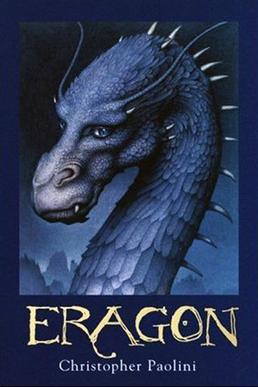
There was a break. Years. I guess, four of them. I was a freshman in college and I read EragonAnyone familiar with the fantasy genre, or YA literature, or even anyone who walked into a Books-a-Million in the last decade has heard of his Inheritance Cycle at one point or another. 


Seriously--this cover was everywhere

From those I have spoken to, Christopher Paolini seems to be the kind of writer that people either love or hate (or they loved for years and then learned to hate by talking to other people who already hated him, which, I think, is just terrible. If you’re going to hate a thing, at least be original about it).

My own feelings varied. I loved Eragon, at first read. I ate it up. I showed all my friends, my brother, and then we all read the next books together. I loved the world, the characters, the story. But what I loved most of all was that it seemed doable.

For those trying to be writers, there are authors to be admired, worshiped, and copied. Some authors sit on a pedestal—we don’t know how they did what they did. And there are those we read that, at the end, we say—“that was good. But not so very good. I could do that.”

I wrote a scene, trying to reach into the epic mystery I had felt when I read Eragon, the kind of writing built on Beowulf and Tolkien (but more importantly Tolkien building on Beowulf). It was a nonsense action scene, but I built a mythology on it. Hidden powers, statues becoming people, weaklings becoming warriors.


Like this, except with far less offensive language

I suppose I learned some things in college. But mostly I wrote. I can see it in all my notebooks. The notes were on the pages, but my attention was in the margins. Everything got applied to my story—anthropology, art, western civ, mythology, composition. Four years led to two more, and little changed. Now the stories were stranger, and my comments were too.

By this time I already had full printed copies. I finished the first draft on July 27, 2009. Then there was a second. By the third, I’d realized Office Depot could print double-sided, costing me half the price of paper. Instead of wasting $45 on these ring-bound, black plastic covered manuscripts, I was only wasting $23.

I had friends reading them. Rave reviews, of course. There was a good mix of friendly unawareness and actual helpfulness. My brother read the most. If I died today, he might be able to piece my story together just because of how many times we’ve sat and talking about it. I started querying agents in 2012.

I had some partials, but no dedicated interest. Nothing stuck. I rewrote and rewrote. Every year I created a new, dramatic file folder in my “writing” file. 2012. 2013. 2014. Each time, my book was revisited, redone. This was it, the version that would change it all. But it was still the same. Paolini, and Eragon, were amazing to me, and yet they were still criticized because they were “unoriginal,” a recreation of fantasy tropes. What can I make if I struggle to recreate the recreation?

It’s about perception. What story do I want to tell, and, most importantly, how do I want to tell it? What is my goal? To tell a story that my friends and family will read, over and over again, because they love me, or to create something real, something new?

I have to murder it. This twelve year old, fermenting piece of work. For now, I will set it down, work on other ideas that aren’t so mired in a decade of past words. Someday, I’ll pick it back up, and see what I can make of it. If it’s unrecognizable, that’s because it wasn’t going anywhere as it was.

This hurts, but not as much as failing would.